
If you are over 35 and your hair does not behave the way it used to, you are in good company. Curl can change as you get older, and colour and heat speed that up. The good news is that a curl-aware cut and a gentler washing routine bring most of the shape and bounce back. If you have straightened for a long time, some curl may not fully return, and being honest about that from the start saves you money and disappointment.
At Rixon Hairdressing in central Geelong, a curl-aware cut (we call it a design cut) is shaped around the way your hair grows and falls, not the way straight hair does. That difference is where most of the result comes from. Here is what changes with age, what a good cut does about it, and how to look after curls at home.
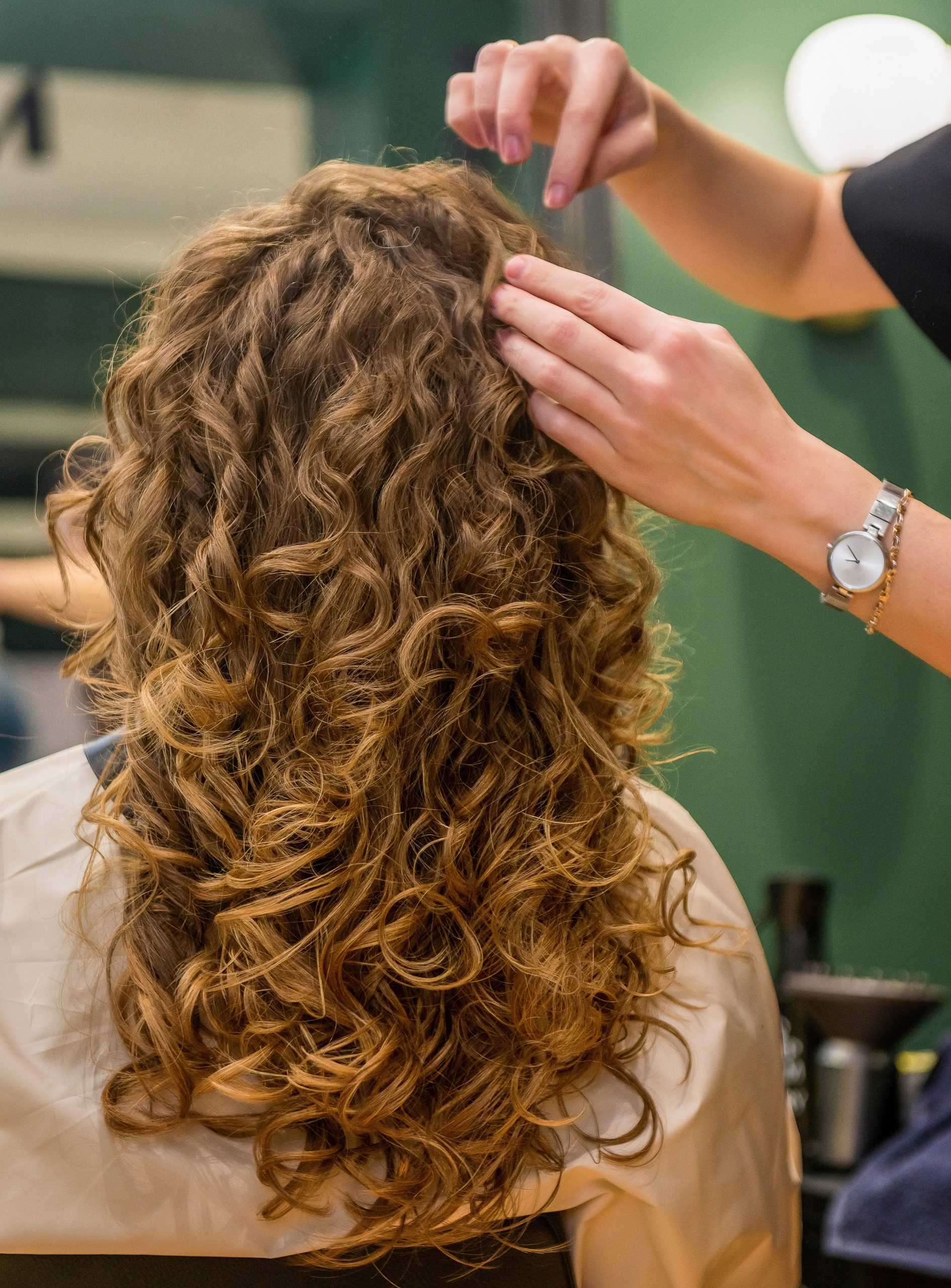
Why do curls change after 35?
Curl is not fixed for life. The pattern you were born with can loosen or tighten over the years.
Age and hormones can change the shape of the hair as it grows. Curls may drop into waves, or waves may start to frizz. Density changes too. Many women have less hair through their late 30s and 40s than in their 20s, so curls can look flatter on top even when the curl itself is fine.
Colour and heat play a big part. Foils, regular straightening and hot tools change the texture of the hair and can stretch the curl out. A salon that has worked on Geelong hair for more than 50 years sees this constantly: the same client's curl pattern shifting from one decade to the next. None of it means your curl is gone. It means your hair needs a different approach than it did 15 years ago.
Why a curl-aware cut matters more than any product
The most common curly hair mistake happens in the chair, not the bathroom. Curly hair cut like straight hair loses its shape.
Straight hair is usually cut wet, in even lengths, because it dries close to how it sits when wet. Curly hair shrinks as it dries. A length that looks right wet can spring up much shorter and rounder once the curl forms. A stylist who does not account for that ends up with a shape that sits heavy and flat, or a fringe that is suddenly too short.
A curl-aware cut works differently. Weight is removed in the right places so curls have room to spring instead of dragging down. Layers are placed around your own curl pattern and face shape, not added by a set formula. The cut is often done dry, or checked dry, so the stylist can see where each curl falls before the final shape is set.
This is where a design cut earns its name. The stylist reads how your hair grows, where it sits heavy and where it kicks out, then cuts to that. It is slower than a standard cut, and it is the single thing that makes the biggest difference to curly and wavy hair after 35.
How should I wash and dry curly hair to hold the shape?
Curly hair behaves better with less washing and a gentler hand. The goal is to keep the curl clumped together, not break it apart.
- Wash less often. Curly hair tends to be drier, because the scalp's natural oils travel slowly down the bends of each strand. Two to three washes a week suits most curls. Some need less.
- Dry with a t-shirt, not a rough towel. Rubbing with a normal towel roughs up the hair and causes frizz. Squeeze gently with a soft cotton t-shirt or a microfibre towel instead.
- Try plopping. Plopping means wrapping your wet hair up in a t-shirt for a few minutes after you put product in. It soaks up extra water and helps the curls set in their natural shape while you get ready.
- Use a diffuser. A diffuser is the bowl-shaped attachment for your hairdryer. It dries curls on low heat without blowing them apart. Dry on a low setting and stop while the hair is still just damp.
- Do not brush dry curls. Brushing dry curls splits the clumps and turns them to frizz. Detangle with your fingers or a wide-tooth comb in the shower while the conditioner is in, then leave them alone.
Frizz: is it dryness or damage?
Frizz has two main causes, and they need different fixes. Telling them apart saves you buying products that will not help.
| What to look at | Dryness | Damage |
|---|---|---|
| How it looks and feels | Frizzy and dull, but the curls still form. Feels softer after conditioning. | Straw-like and rough. Snaps easily. Curls look stringy or broken at the ends. |
| Common causes | Not enough moisture, hard water, washing too often. | Heat tools, bleach or colour, years of straightening. |
| What helps | A richer conditioner, a leave-in, washing less, a hydrating treatment. | A cut to take off the damaged ends. Conditioner hides it but cannot repair it. |
Dryness you can treat. Damage you mostly have to grow out and cut off. That is the honest answer. If your ends are snapping or feel like straw, no product will bring them back, and the kindest thing for the rest of your hair is to take the damaged length off. If your hair feels dry and tired all over, our guide on reviving dry and damaged hair goes deeper. If strands are snapping in the middle, the post on why hair breaks is worth a read.
Do fine curls and thick curls need different products?
Yes. The biggest product mistake is using the wrong amount for your hair type, not the wrong brand.
- Fine curls weigh down fast. Too much cream or oil makes them limp and greasy. Use light products, and use less than you think you need.
- Thick, coarse curls drink up moisture. They can take heavier creams and more product without going flat, and they often need it.
Getting the amount right matters more than chasing the newest bottle. Our guide on getting bouncy, voluminous curls covers product choice in more detail.
There is one thing no product fully beats. Geelong's coastal air carries a lot of moisture, and humid days pull water into the hair and lift the outer layer, which is what turns a smooth curl frizzy by lunchtime. A good cut and a curl cream with a little hold give you a head start, but on the muggiest days even great curls will puff a bit. That is the hair doing its job, not a sign you have done something wrong.
Getting your curl shape back at Rixon
If you have straightened for years, book a consultation before you commit to a big cut. The stylist can look at how much curl is still forming, check the condition of your ends, and tell you honestly what is realistic before any length comes off. That one conversation is the difference between a cut you love and one you regret.
Rixon Hairdressing is at 112 Moorabool Street in central Geelong. A new-client restyle cut and blow dry includes a full consultation, a conditioning treatment, your cut and a blow-dry finish, and runs about 45 to 75 minutes. New clients get $25 off that first visit. Book online or give the salon a call, and tell us your hair has changed and you want your curl back. That is exactly the appointment to make.
Common questions about curly hair after 35
Often, at least in part. Curl that has been stretched by heat usually returns once you stop straightening and cut off the most damaged length. How much comes back depends on how long and how hot you went, and whether the curl pattern itself has shifted with age. A stylist can give you a realistic read in a short consultation before you commit to anything.
Most curly hair does well on two to three washes a week. Curly hair is drier than straight hair, so washing daily strips it and causes more frizz. If your scalp gets oily between washes, rinse and wash the roots only and leave the lengths alone.
It genuinely is lower maintenance, because the colour isn't placed at the root, so there's no sharp line to chase as it grows. You'll still want the odd gloss to keep the tone fresh, but you can comfortably go three to four months between full appointments. That's the main reason people switch to it.
Healthy curl forms a clear, springy shape from the root down to the mid-lengths. Damage shows up as straw-like, stringy or snapping ends while the curl higher up still forms. If only the ends look rough, that is usually damage, and a trim helps more than any product.
A curl cut, or design cut, is shaped to the way your curls grow and fall rather than cut to even lengths like straight hair. It often involves cutting or checking the hair while it is dry, so the stylist can see where each curl sits before setting the final shape.


